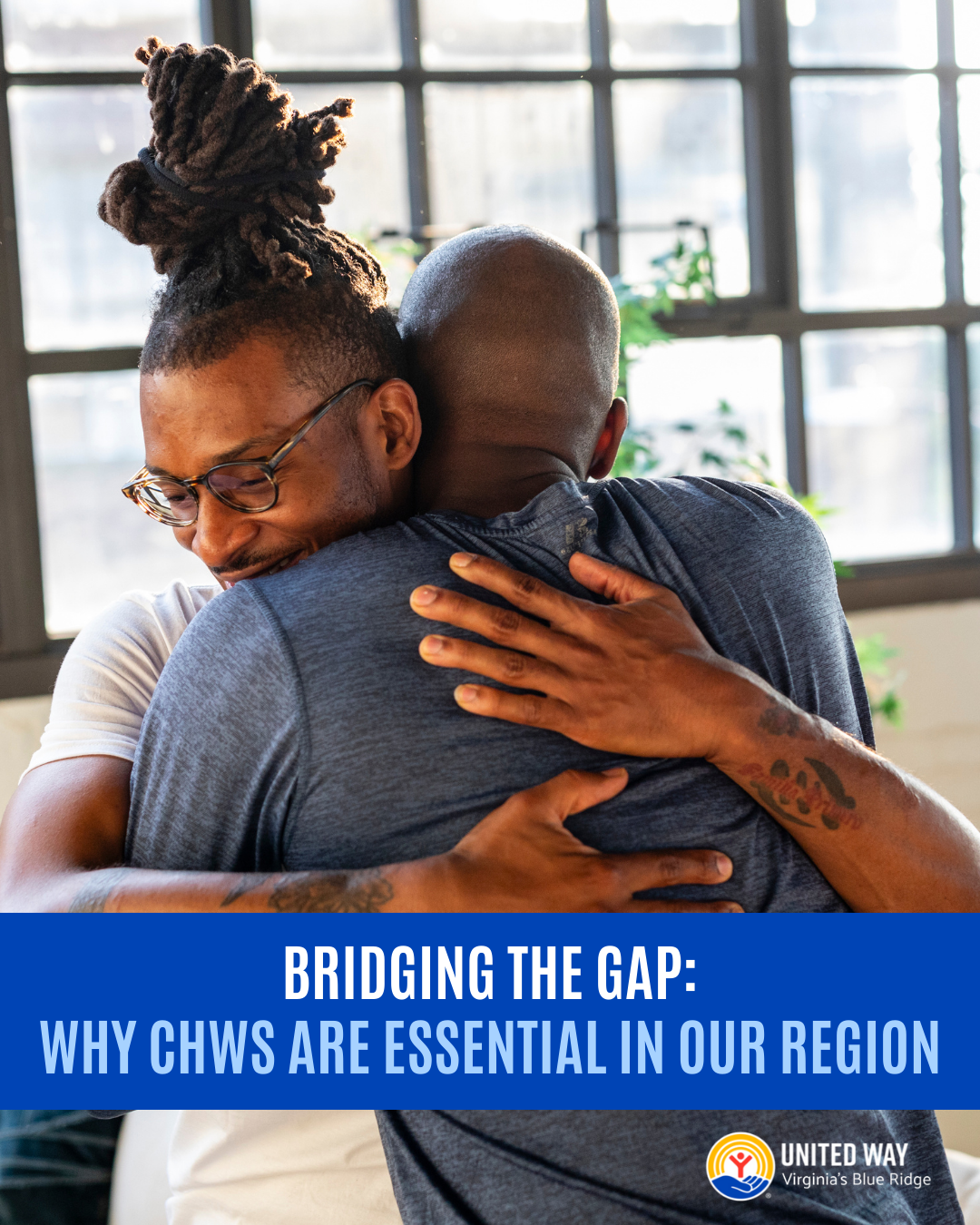
Community Health Workers (CHWs) are more than just healthcare support—they are the backbone of equitable, accessible, and culturally responsive care in underserved communities. Often drawn from the very neighborhoods they serve, CHWs embody trust, empathy, and advocacy. In our region, unfolding across diverse landscapes and populations, they’re instrumental in bridging critical gaps in healthcare access and outcomes.
Health Is More Than Healthcare
When we talk about health, it’s easy to think only of doctor’s visits, prescriptions, or hospital care. But true health is shaped by much more than medical treatment. Experts estimate that clinical care accounts for only about 20% of a person’s overall health outcomes, while the other 80% is influenced by social determinants of health—the conditions in which people live, learn, work, and play (CDC).
That means our well-being depends on whether families can access:
- Nutritious food and affordable groceries.
- Safe housing and neighborhoods.
- Reliable childcare that allows parents to work and children to thrive.
- Education and opportunities to gain skills.
- Mental health support and social connection.
- Physical activity resources like parks, gyms, or safe sidewalks.
- Economic security and transportation to jobs or services.
Without these, even the best medical care can only go so far.
This is exactly where Community Health Workers shine. CHWs don’t just hand someone a brochure and send them on their way—they walk alongside community members to help navigate this broader landscape of health. That might mean:
- Connecting a family to a food pantry while also scheduling their health screenings.
- Helping a parent sign up for childcare vouchers and job training while addressing stress and mental health.
- Guiding an older adult through fitness programs at a local park while also coordinating transportation to medical appointments.
By addressing the whole picture of health, CHWs ensure that people don’t fall through the cracks. They are the human bridge between the healthcare system and the real-life needs that determine whether families in our region can truly thrive.
The Power of Proximity and Trust
CHWs deliver essential services right where people live—whether through door-to-door outreach or local community sites. This closeness reduces barriers like transportation and cost, improving access to care and preventive services, especially for rural and marginalized populations (exemplars.health).
Because CHWs are part of the community, they resonate with local cultures, languages, and customs. That trust empowers them to foster stronger engagement and open communication between healthcare systems and historically underserved groups (joinchic.org, bls.gov).
Effectiveness and Equity at Home
Across the U.S., research confirms that CHWs are effective in reducing healthcare costs and closing disparity gaps (nachw.org).
Some of their key roles include:
- Helping community members navigate complex healthcare and social service systems.
- Delivering culturally tailored education, such as heart disease prevention within minority communities (capc.org, nhlbi.nih.gov).
- Acting as trusted translators of medical information and connecting people to social services (capc.org).
- Expanding access in rural and underserved areas—where healthcare worker shortages and mortality disparities remain pressing challenges (en.wikipedia.org).
Why CHWs Matter in Our Valley
In our region, CHWs are not an abstract concept — they are neighbors who show up in the hardest moments and stay until solutions are in place.
- Cultural and Geographic Fit: They understand local nuances, build community rapport, and earn trust in ways formal systems often can’t. For example, when a man in our valley began missing dialysis and surgery appointments after losing his wife — with no one else to call — an UWVBR CHW named Lashara stepped in. She coordinated with the sheriff’s department for a well-check, worked through utility paperwork, and stayed with him until he had the care and services he needed.
- Accessibility and Prevention: By showing up where people live, CHWs prevent crises before they spiral. Lucas, another UWVBR CHW, regularly checks on an older adult in Franklin County. One day, he not only delivered a food box but also rearranged her furniture to make her home safer for her mobility needs. That same visit, he connected her with senior programs that restored her sense of belonging after years of isolation.
- Cost-Effectiveness: With relatively low per-person costs, CHWs can lead to substantial healthcare savings while improving outcomes (hdsbpc.cdc.gov). These “small” acts — like delivering a heater or a walker — may not sound flashy, but they prevent costly emergencies down the road.
- Preparedness in Crises: When tragedy strikes, CHWs are often first to respond. After a mother passing through Franklin County lost her son in a pedestrian accident, Lashara mobilized local churches, funeral homes, and a pastor to provide both immediate support and a place to live. She was there in the rawest moment of grief, making sure she wasn’t alone.
- Closing Gaps: CHWs also help individuals rebuild stability after incarceration, unemployment, or housing insecurity. Through United Way’s partnerships with hubs like New Horizons Healthcare, CHWs are connecting neighbors to jobs, safe housing, food access, and financial tools to build long-term security. One recent participant went from facing homelessness to being steadily employed and housed — a transformation made possible by a CHW’s persistence and local partnerships.
Together, these stories show how CHWs are not just filling service gaps; they’re helping neighbors break the cycle of crisis and move toward stability.
Conclusion
They’re more than healthcare workers—they’re neighbors, confidantes, translators, educators, and advocates. CHWs anchor our health ecosystem, especially in times of challenge, whether it’s emerging pandemics, chronic disease, or social hardship.
Here in our valley, investing in CHWs isn’t just about expanding capacity—it’s about affirming equity, building resilience, and ensuring that no one is left behind in health and well-being.