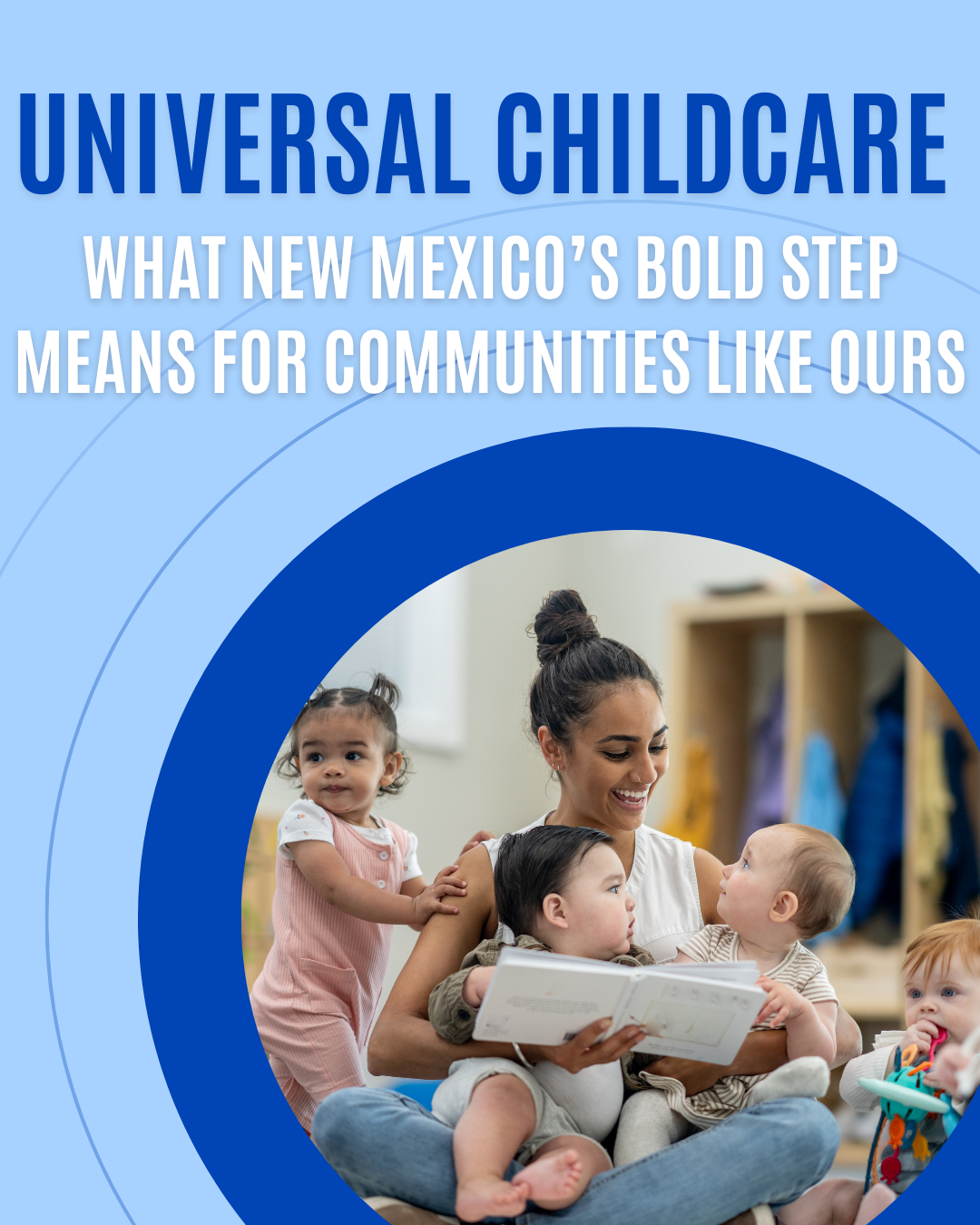
In September, New Mexico made history by becoming the first state in the nation to guarantee no-cost universal child care. Starting November 1, every family in the state will have access to child care regardless of income, saving families an average of $12,000 per child each year. State leaders framed it clearly: child care is not a luxury, it’s essential to family stability, workforce participation, and future prosperity.
This groundbreaking policy is rooted in what research has shown for years: when children have access to safe, high-quality care in their earliest years, they enter school more ready to learn, families are more financially stable, and communities build stronger futures. It’s not just a family issue—it’s an economic issue, a workforce issue, and a community resiliency issue.
Why This Matters for Virginia’s Blue Ridge
Here in our region, families still face tough barriers to accessing affordable, reliable care. Across Virginia, more than 45% of families with children under age five live in child care deserts, where there are simply not enough licensed providers to meet demand. For those who do find care, the costs often rival college tuition, leaving many parents with impossible trade-offs: do they work, or do they stay home because child care costs more than their paycheck?
United Way of Virginia’s Blue Ridge sees the ripple effects every day. Without access to affordable care, parents struggle to maintain jobs, employers lose workers, and children miss out on early learning experiences that set the foundation for success in school and life.
Where Virginia Stands
Virginia has taken important steps toward addressing these challenges:
- In 2023, the Commission on Early Childhood Care and Education was established to study how to make child care more affordable, expand access, and support the early childhood workforce statewide (source).
- Virginia’s Ready Regions initiative—led in our area by United Way of Virginia’s Blue Ridge—coordinates resources, training, and partnerships to improve quality and access to child care across communities (source).
These steps are important, but families in our community are still struggling today. New Mexico’s bold move shows what’s possible when states prioritize children and families at the highest level.
What You Can Do
Policy change takes time, but action starts locally. Here are ways you can help right now:
- Donate to Youth Opportunity → Help us provide meals, after-school programs, and child care support for local families.
- Volunteer With United Way → From packing literacy kits to mentoring youth, your time directly supports families in need.
- Contact Your State Legislators → Tell them child care affordability should be a top priority in Virginia.
Here is a source to find the representative for your area: https://whosmy.virginiageneralassembly.gov/
Your voice matters. When legislators hear from parents, employers, and community members, it helps shape the future of child care policy in Virginia.
The Bigger Picture: Building Resilient Communities
Universal child care is a powerful example of how strong communities are built. Resiliency isn’t only about bouncing back from natural disasters—it’s also about ensuring families can weather everyday challenges, like losing a job, managing a health condition, or struggling to afford safe, reliable care.
When families have the resources they need—whether that’s quality child care, access to health care, or help during a crisis—the entire community is stronger, healthier, and better prepared for whatever comes next.
At United Way of Virginia’s Blue Ridge, we believe every family deserves stability and every child deserves opportunity. By strengthening youth opportunity, advocating for child care access, and supporting working families, we’re helping to build a community that is more connected, more supportive, and ready to respond to any challenge.
Bottom Line
New Mexico has shown what’s possible. Here in Virginia’s Blue Ridge, we can’t afford to wait—we must act now to ensure children and families have the support they need. Whether it’s your donation, your time, or your voice, every part adds up to a stronger, more resilient community.